

Last Updated: October 23, 2026
Quick Summary
Sun protective clothing for sensitive skin works mechanically: UPF 50+ fabric blocks about 98% of UVA and UVB rays with no reapplication, sting, or fragrance. Choose tightly woven, loose-fitting UPF 50+ garments and check labels for formaldehyde, antimicrobial, and fragrance finishes that trigger reactions.
- UPF 50+ allows roughly 1/50th of UV rays through, blocking about 98% of UVA and UVB.
- Synthetic fibers like polyester and nylon generally outperform untreated cotton and linen for UV blocking.
- Avoid wrinkle-resistant, antimicrobial, fragrance, and azo dye finishes, which commonly irritate reactive skin.
- OEKO-TEX Standard 100 is the most widely recognized certification for testing finished garments for harmful substances.
- Wash new garments once in cold water and patch-test fabric on the inner forearm for 24 hours.
Table of Contents
- Why Sun Protective Clothing Matters for Sensitive Skin
- Best Fabrics for Sun Protection When Your Skin Reacts
- Chemical Sensitivities and Fabric Finishes to Avoid
- Is UPF Clothing Worth It for Sun-Sensitive Skin?
- Sun-Protective Clothing for Specific Skin Conditions
- Layering Strategies for Extreme Heat
- How to Wash UPF Clothing Without Losing Protection
- Choosing Sun-Protective Gear: A Quick Comparison
- Frequently Asked Questions
Why Sun Protective Clothing Matters for Sensitive Skin
The UPF sun-protective clothing market was estimated at USD 25.42 billion in 2026, according to Business Research Insights market forecast, and it is projected to reach USD 57.5 billion by 2035. That growth tracks a simple reality: for people with sensitive skin, sunscreen alone rarely solves the problem. This guide from Line In The Sand explains how sun protective clothing for sensitive skin works, which fabrics help, and which finishes to avoid.
UPF clothing is apparel made from fabric tested and rated for how much ultraviolet radiation it blocks from reaching your skin. For sensitive skin, the appeal is mechanical rather than chemical: no reapplication, no sting, no fragrance, no wait time before you get in the water.
How UPF Ratings Work (UPF 50+)
Ultraviolet Protection Factor (UPF) measures how much UV radiation a fabric blocks. UPF 50+ allows roughly 1/50th of UV rays through, blocking about 98%. Unlike sunscreen SPF, which only applies to UVB, the rating covers both UVA and UVB.
A 2022 review of ultraviolet-protective clothing concluded that, based on available data, sun-protective clothing is effective at reducing UV radiation transmittance to the skin.
Sunscreen vs. UPF Clothing: What Dermatologists Recommend
Dermatologists recommend both, not one instead of the other. The Skin Cancer Foundation guidance on sun-protective clothing emphasizes covering more skin with long sleeves, long pants or skirts, and a loose fit, because tight clothing can stretch and reduce protection.
For sensitive skin, the split matters: sunscreen needs reapplication every couple of hours and after swimming, while a UPF garment keeps working until it gets wet through or stretched tight.
Best Fabrics for Sun Protection When Your Skin Reacts
Fabric composition decides both UV coverage and how your skin feels against it. Two variables dominate: the fiber and how tightly it is woven.
Synthetic vs. Natural Fibers for UV Coverage
Synthetic fibers generally outperform natural ones for UV blocking. Polyester and nylon have tight molecular structures that absorb UV well and hold up better when wet.
For reactive skin, the trade-off is breathability: dense synthetics can trap heat. Our Long Sleeve Swimsuit uses an 80% nylon and 20% spandex blend rated UPF 50+, with quick-drying stretch fabric that stays comfortable for hours.

Chemical Sensitivities and Fabric Finishes to Avoid
Fabric finishes are the most overlooked trigger for sensitive skin. A garment can be woven from a skin-friendly fiber and still irritate from what was added: formaldehyde-based wrinkle resistance, chlorine-based antimicrobial treatments, and heavy dye loads. Most guides cover UPF ratings and stop before the chemistry on the fabric surface.
How Finishes Trigger Reactions
Contact dermatitis from clothing follows one of three mechanisms:
- Irritant contact dermatitis, a direct chemical insult to the skin barrier from strong surfactants, residual alkaline processing chemicals, or high formaldehyde levels. The reaction is dose-dependent.
- Allergic contact dermatitis, an immune response that can develop after repeated exposure. Formaldehyde resins, certain disperse dyes (especially azo dyes), and rubber accelerators in elastic waistbands are common culprits; once sensitized, even trace amounts can trigger a flare.
- Aggravation of an existing barrier defect, with eczema or rosacea, the barrier is already compromised, so finishes tolerable on intact skin can sting, itch, or burn on a flare.
What to Look For on the Label
Check the tag and product page for these, in rough order of how often they cause problems:
- Wrinkle-resistant, "easy care," or "no-iron" finishes, often rely on formaldehyde resins that release free formaldehyde over time, especially in heat and humidity
- Antimicrobial or "odor-control" treatments, can use silver, triclosan, or quaternary ammonium compounds that irritate compromised skin barriers
- Azo dyes and heavy-metal dyes, more likely to cause contact reactions, particularly in dark saturated colors
The Buying Protocol for Reactive Skin
- Prefer brands that disclose what is not in the fabric. "No formaldehyde, no antimicrobial finish, no fragrance" is a verifiable claim; silence is not.
- Ask for third-party testing. OEKO-TEX Standard 100 is the most widely recognized certification for testing finished garments for harmful substances, including formaldehyde and azo dyes. Bluesign and GREENGUARD are useful secondary signals. If a brand cannot name a certification, treat the finish as unknown.
- Wash new garments before the first wear, one cold wash removes much of the surface residue from manufacturing and shipping.
- Patch-test a new fabric on the inner forearm for 24 hours before a full day of wear, especially with a history of allergic contact dermatitis.
- Keep a reaction log. Note the garment, fiber, finish claims, and reaction. Patterns emerge fast, and a dermatologist can use it to narrow patch testing.
If a brand cannot confirm a third-party certification, assume the finish is unknown and wash before wearing. For skin that reacts, verifiable fabric beats unverifiable fabric.
Is UPF Clothing Worth It for Sun-Sensitive Skin?
Yes, for most people with sun-sensitive or sun-allergic skin, UPF clothing is worth it. The reason is consistency: a garment does not wear off, need reapplication, or depend on how thoroughly you covered a hard-to-reach spot.

Two caveats keep this honest. First, UPF clothing is not a guarantee of complete protection. Guidance summarized by Smilow Cancer Hospital from American Cancer Society recommendations notes that dry, dark, tightly woven fabrics are more protective but will not block all UV rays. Second, protection drops when fabric is stretched, wet, or worn thin.
For someone who reacts to sunscreen or simply cannot reapply every two hours while paddleboarding, the value calculation is easy. For occasional short exposure, sunscreen is fine.
Sun-Protective Clothing for Specific Skin Conditions
People managing photosensitivity, sun allergy, or a diagnosed sun-related condition need coverage first and comfort second. But "sensitive skin" is not one condition, and the fabric that suits eczema is not the fabric that suits rosacea, most guides treat sensitive skin as a single category and recommend the same UPF 50+ long-sleeve layer to everyone.
Eczema and Atopic Dermatitis
The priority is a smooth, non-abrasive surface and a barrier that does not trap sweat against inflamed skin.
- Texture: Flat, tightly woven knits with no brushed or napped interior. Fleece linings and terry backings can abrade a flare.
- Seams: Flatlock or bonded seams reduce the ridge that rubs at the shoulder, underarm, and waist. Avoid bulky overlocked seams in high-friction zones.
- Fit: Loose but not billowing. A loose fit protects better than a tight one because stretched fibers open gaps, but fabric that bunches under a strap creates a friction point.
Rosacea
Rosacea skin reacts to heat, friction, and sun, often in that order. The goal is to block UV without raising skin temperature.
- Heat load: Choose the lightest weight that still carries a UPF 50+ rating. A heavier fabric with the same rating adds heat for no protective gain.
- Airflow: Mesh panels at the neck, underarms, and back move heat out. A wide-brim hat with a breathable crown protects the face without cooking the forehead.
- Color: Light colors reflect visible light and heat; dark colors absorb UV more efficiently but run hotter. For rosacea, a light-colored, tightly woven fabric is often the better trade.
Photosensitivity and Sun Allergy (PMLE, Lupus, Drug-Induced)
For polymorphous light eruption, lupus-related photosensitivity, and drug-induced photosensitivity, the margin for error is smaller and coverage discipline matters more than fabric feel.
- Coverage first: Long sleeves, long legs, and a wide-brim hat form the baseline. Loose fit protects better than tight fit because stretched fibers open gaps.
- UPF floor: Treat UPF 50+ as the minimum, not the target. Higher-UPF fabrics exist.
- Gaps: The backs of the hands, ears, nape of the neck, and tops of the feet are the most commonly missed zones. A wide-brim UPF hat and a long-sleeve layer covering wrist to knuckle close most of them.
Coverage That Stays Put
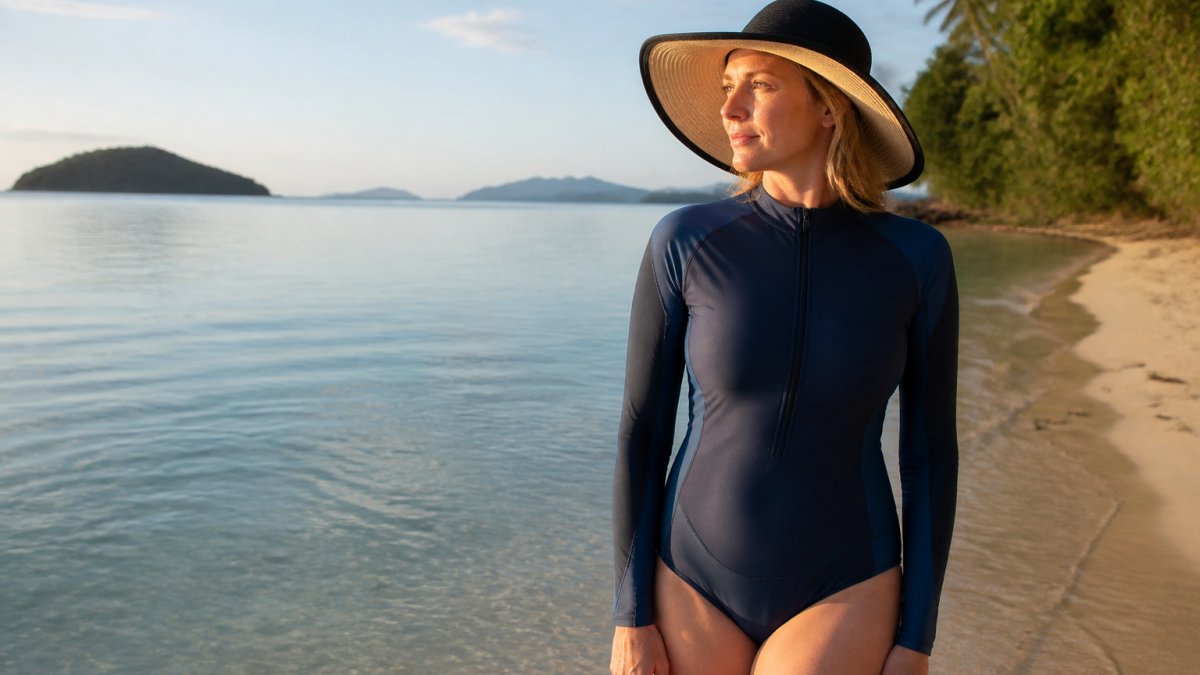
Coverage that shifts during activity defeats the purpose, a rashguard that rides up or a sleeve that pulls tight. Our Women's Seize the Ray Rashguard has a slightly forward shoulder seam and a back shirt tail for full coverage, rated UPF 50+ and made from recycled microfiber polyester with moisture-wicking properties.

Layering Strategies for Extreme Heat
Layering sounds counterintuitive in heat, but the right layers cool you rather than trap heat: a moisture-wicking base layer moves sweat off the skin barrier, and a loose UPF outer layer blocks sun while allowing airflow.
In practice, that means:
- Start with a quick-dry, fitted base layer rated UPF 50+
- Add a loose, breathable UPF layer over it for UV coverage
- Use mesh panels and lighter weights at the neck and underarms
- Skip dark, heavy layers in direct midday sun despite their higher natural UV absorption
Thermal regulation comes from fabric weight and airflow, not from covering less. A lightweight UPF 50+ layer beats bare skin for anyone who burns in twenty minutes.
How to Wash UPF Clothing Without Losing Protection
Washing UPF clothing does not strip its rating, but how you wash it affects how long protection lasts. Most UPF protection is built into the fiber or weave, not applied as a coating, so gentle care preserves it.
Follow these rules:
- Machine wash cold on a gentle cycle to protect weave density
- Skip fabric softener, which coats fibers and can reduce moisture-wicking
- Avoid chlorine bleach, which degrades synthetic fibers over time
Rotate your sun-protective apparel rather than wearing one piece every day. Stretched, thinning fabric loses UV coverage before it looks worn out.
Choosing Sun-Protective Gear: A Quick Comparison
Match the garment to the exposure, not the label alone. Here is how the core pieces stack up for sensitive skin.
| Garment | Protection Level | Best For | Key Consideration |
|---|---|---|---|
| Long-sleeve swimsuit | UPF 50+ | Swimming, snorkeling, paddleboarding | Full arm and torso coverage in one piece |
| Rashguard | UPF 50+ | Layering over swimwear, all-day wear | Check shoulder and hem coverage |
| Boyshort swimsuit | UPF 50+ | Water sports needing leg coverage | Built-in short reduces ride-up |
| Wide-brim UPF hat | UPF 50+ | Face, neck, and ear protection | Adjustable chinstrap for wind and water |
Our Boyshort Long Sleeve Swimsuit combines full sleeves with a built-in boy short for coverage that does not shift mid-activity, and the All-Sport UPF Hat adds side mesh panels and a removable chinstrap for face and neck protection.
For sun-sensitive skin, the goal is coverage you will actually keep on. Start with a UPF 50+ layer that fits loosely, check the finishes before you buy, and wash it gently so the protection lasts more than one season.
Sensitive skin makes sun protection a daily decision, and the wrong fabric turns a good day outdoors into a week of irritation.
Frequently Asked Questions
Do SPF shirts actually work for sensitive skin?
Yes. A 2022 review of ultraviolet-protective clothing found consensus that sun-protective clothing is effective at reducing UV radiation transmittance to the skin, according to the review authors. For sensitive skin, the advantage is that UPF fabric blocks UVA and UVB rays without the ingredients, fragrances, or preservatives that trigger contact reactions in some sunscreens. The Skin Cancer Foundation recommends covering more skin with long sleeves and long pants, and choosing loose-fitting apparel because tight clothing can stretch and reduce protection.
What clothing material is best for sun protection if you have eczema?
Look for tightly woven, smooth fabrics that sit loosely against the skin. The American Cancer Society guidance summarized by Smilow Cancer Hospital notes that dry, dark, tightly woven fabrics are more protective, though no fabric blocks all UV rays. For eczema-prone skin, a moisture-wicking synthetic like polyester or nylon with a UPF 50+ rating and no added finishes tends to irritate less than rough weaves or heavy dyes. Patch-test a small area first, and avoid tight cuffs or seams that rub.
How does UPF clothing differ from regular sunscreen?
Sunscreen is a topical product that needs reapplying every two hours and after swimming, while UPF clothing is a physical barrier rated by how much UV radiation passes through the fabric. UPF 50+ blocks about 98% of UV rays. Clothing does not wear off mid-swim or sting on irritated skin, which is why dermatologist-recommended sun protection often combines both: UPF garments for covered areas and sunscreen for exposed skin like the face, hands, and neck.
Can sun-protective clothing replace sunscreen for those with chemical sensitivities?
It can cover most of the body, but not all of it. Long-sleeved sun-protective apparel, long pants or skirts, and sun-protective accessories like a UPF hat handle the arms, legs, torso, and scalp. Your face, ears, neck, and hands still need protection, so choose a mineral sunscreen with zinc oxide or titanium dioxide, which has fewer chemical filters to react to. Ask a dermatologist before dropping sunscreen entirely, especially if you have a photosensitivity condition.
How do I wash UPF clothing without ruining the protection?
Wash in cold water on a gentle cycle with a mild, fragrance-free detergent, then hang or line dry. Skip fabric softeners, bleach, and dryer sheets, which can coat fibers and reduce moisture-wicking performance. Heat from a dryer can also break down stretch fibers over time. Garment durability matters: repeated washing and chlorine exposure gradually wear down UV-blocking technology, so replace pieces when the fabric thins, pills, or stretches out.
What is the best lightweight fabric for sun protection that won't irritate skin?
A lightweight, tightly woven polyester or nylon blend with a UPF 50+ rating and moisture-wicking properties is a strong choice. These synthetic fibers hold up in water, dry quickly, and can be made with a smooth surface that reduces friction on sensitive skin. Lighter fabrics and looser weaves provide less UV protection, per REI, so check the UPF label rather than judging by weight alone. A breathable fabric with anti-microbial treatment also helps in humid heat.
