

Table of Contents
- Why Sun Safe Outfits Beat Sunscreen Alone on the Road
- What to Look for in Sun-Protective Clothing for Travel
- UPF 50+ Travel Clothing: The Pieces Worth Packing
- Versatile Swimwear for Swimming and Walking
- Your Sun-Safe Vacation Packing List
- Sun Safe Outfits by Destination and Activity
- Staying Cool in the Heat Without Losing Coverage
- Conclusion
- Frequently Asked Questions
Last Updated: October 17, 2026
Why Sun Safe Outfits Beat Sunscreen Alone on the Road
Sunscreen needs reapplying every two hours, and most travelers forget. Sun safe outfits for travel solve that problem by putting protection directly on your body.
That matters because clothing protection doesn't wear off. A review of published ultraviolet clothing research found that dyed garments tend to block more UV than undyed ones, with darker shades like red and black offering stronger protection.
Below, we break down how UPF ratings work, which pieces earn suitcase space, and how to build complete outfits for beach days, hikes, and town afternoons.
UPF vs. SPF: What the Numbers Actually Mean
UPF measures how much ultraviolet radiation fabric blocks before it reaches your skin. SPF measures how long sunscreen delays a sunburn on unprotected skin. They are not the same scale and cannot be compared directly.
UPF 50+ blocks roughly 98% of UV rays. A Skin Cancer Foundation guide to sun protective clothing notes that loose-fitting apparel protects better than tight garments, because stretched fabric lets more UV through.
What to Look for in Sun-Protective Clothing for Travel
Start with the label. Certified UPF 50+ is the baseline for sun-protective clothing for travel, and anything below UPF 30 leaves too much exposure for a full day outside. Beyond the rating, three things decide whether a piece actually works on a trip: fabric weave, fit, and color.
Packability comes next. A garment that wrinkles into a ball and shakes out clean beats a stiff jacket that takes up half your carry-on.
Fabric, Fit, and Color: The Three Details That Decide Protection
Fabric should be tightly woven and breathable. Look for moisture-wicking and quick-drying finishes, which matter more on a travel garment than on a backyard shirt.
Fit should be relaxed. Tight clothing stretches across the shoulders and knees, and that stretch thins the protection.
Color plays a supporting role. Darker dyes generally block more UV, though a certified UPF rating overrides guesswork.
UPF 50+ Travel Clothing: The Pieces Worth Packing
Our answer is simple: build around three core pieces and layer from there. UPF 50+ travel clothing works best when each item pulls double duty, moving from water to town without a costume change.
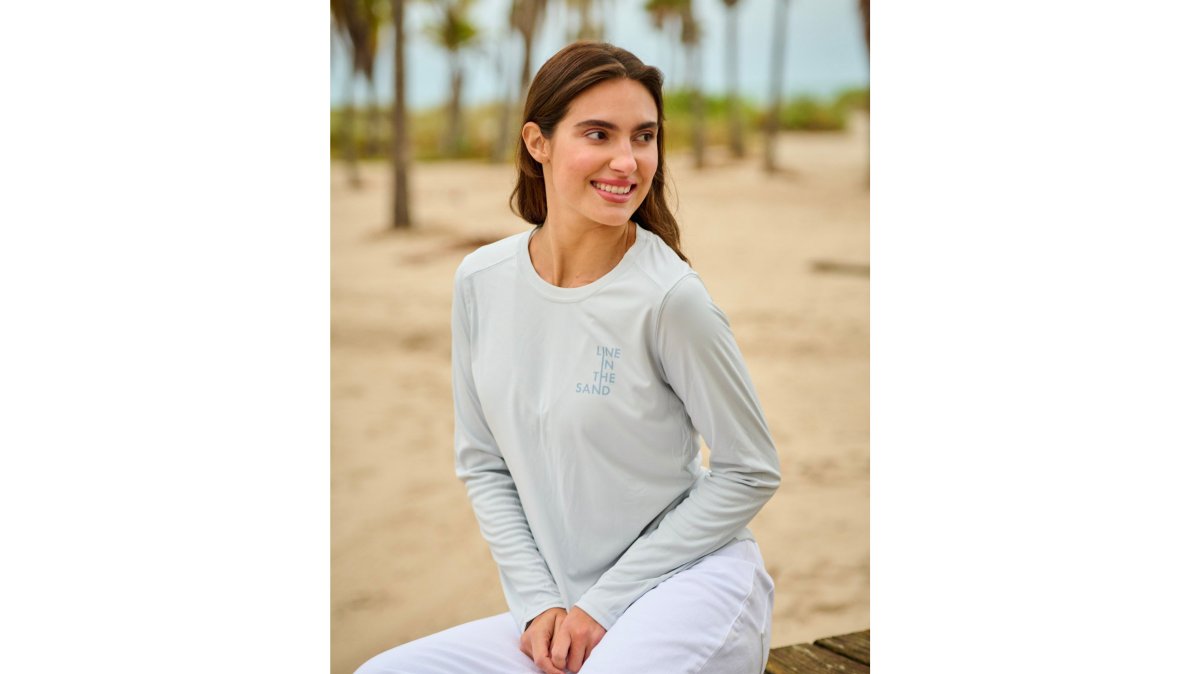
Here is how we would pack it:

| Piece | Price | Why It Earns Space | Best Moment |
|---|---|---|---|
| Long Sleeve Swimsuit | $125.00 | Full arm coverage, quick-drying stretch fabric | Snorkeling, paddleboarding |
| Women's Seize the Ray Rashguard | $62.00 | UPF 50+, moisture-wicking, lightweight | Hiking, kayaking, layering |
| Breezy Beach Shirt | $150.00 | Oversized 100% cotton, UPF 50+, endlessly packable | Town days, cover-up, flights |
The long sleeve swimsuit is the anchor for water days. The boyshort version at $130.00 adds built-in coverage for anyone who prefers more security in the surf.

Versatile Swimwear for Swimming and Walking
The strongest versatile swimwear for swimming and walking does two jobs without looking like it's trying.
A customer named Amanda put it plainly: "It is perfect for all of my favorite activities -- swimming, pickleball, pool party with kids, walking on the beach." That range is the whole point.
Pair a suit with the Sarong at $50.00 for resort lounging, or pull on the Breezy Beach Pant at $150.00 when you're heading from the sand to a café.
Your Sun-Safe Vacation Packing List
A sun-safe vacation packing list should cover every exposed inch, not just the torso. Most travelers pack the swimsuit and forget the neck, ears, and hands.
- Two to three coordinating UPF 50+ tops
- One long-sleeve swimsuit or swim dress
- One packable UPF layer, such as the Breezy Beach Shirt
That structure mirrors Coolibar's travel capsule guidance, which recommends two to three coordinating UPF tops, one sun-protective dress or tunic, one packable jacket or shawl, and one pair of UPF pants or a skirt.
For hats, the Abaco Sea Hat at $99.00 reverses between blue and tan and packs flat. The Cape Town Hat at $80.00 offers a five-inch brim for nose and neck shade.
Sun Safe Outfits by Destination and Activity
Different trips demand different combinations. A beach day and a mountain hike both need coverage, but they need it in different shapes. Below are complete, head-to-toe outfits for the four travel scenarios that matter most, each built from pieces that mix and match across the trip.
City Sightseeing and Long Travel Days
City days are the sneaky ones: you're outside for hours, often in direct sun between museums and cafés, but you're not dressed for the beach. The goal is coverage that reads as normal clothing.
- Top: Women's Seize the Ray Rashguard at $62.00 as a base layer, with the Breezy Beach Shirt at $150.00 worn open over it for airflow and shade.
- Bottom: Breezy Beach Pant at $150.00, which packs flat and moves from a walking tour to dinner without looking like beachwear.
- Head and neck: Cape Town Hat at $80.00 with its five-inch brim, plus the shirt collar turned up to shade the back of the neck.
This combination covers arms, shoulders, neck, and legs while still looking like a travel outfit rather than athletic gear. The shirt and pants share the same UPF 50+ rating, so protection doesn't drop when you shed a layer indoors.
Beach and Water Days
For water, start with the Boyshort Long Sleeve Swimsuit at $130.00. The built-in boy short stays put through paddling and swimming, and the back zipper keeps the fit secure. Add the Sarong at $50.00 for the walk back to the room and a wide-brim hat for the hours you spend reading on the sand.

- Swim layer: Long-sleeve swimsuit with boyshort coverage.
- Cover-up: Sarong wrapped at the waist or over the shoulders.
- Head: Abaco Sea Hat at $99.00, which reverses between blue and tan and packs flat.
Hiking and Mountain Adventures
Hiking adds sweat and elevation to the equation. UV intensity rises with altitude, and trail exposure can last six to eight hours. The outfit needs to wick, vent, and stay put under a pack.
- Top: The rashguard alone for hot, humid trails, or the rashguard plus the Breezy Beach Shirt for exposed ridgelines and strong midday sun.
- Bottom: Quick-drying UPF pants rather than shorts; the Breezy Beach Pant works if the trail is moderate, but dedicated hiking pants with articulated knees are worth the swap for technical terrain.
- Head and neck: A wide-brim hat with a chin cord, plus a buff or neck gaiter for exposed sections above treeline.
Treeline Review's sun shirt coverage highlights hoodless sun shirts as travel-friendly capsule pieces, which fits this layering approach. The key is that every layer can be removed or added without leaving skin exposed for long.
Resort and Pool Days
Resort days are low-effort but high-exposure: you're in and out of water and lounging for hours. The outfit should be easy to rewear and quick to dry.
- Swim layer: The Long Sleeve Swimsuit at $125.00, or the swim dress if you prefer more coverage through the thighs.
- Cover-up: The sarong for lounging, swapped for the Breezy Beach Shirt when you head to lunch.
- Head: Either hat, depending on how much shade you want; the Cape Town Hat's five-inch brim covers more of the face and neck.
Staying Cool in the Heat Without Losing Coverage
Heat comfort comes down to airflow, not exposed skin. Loose cuts, breathable weaves, and light colors keep you cooler than a tank top that leaves your shoulders burning by noon. But 'breathable' is a vague word, so here is what actually drives the tradeoff between coverage and comfort.
Fabric Weight and Weave
Fabric weight is measured in grams per square meter (GSM). A tightly woven synthetic like the 80% nylon, 20% spandex blend used in the long sleeve swimsuit dries fast and stretches without thinning, while a loose cotton like the Breezy Beach Shirt breathes well but holds moisture longer.
The weave matters as much as the weight. Tightly woven fabrics block more UV but can trap heat; open weaves vent better but may need a UPF finish to hit their rating.
Fit and Ventilation
Fit should be relaxed, not oversized to the point of flapping. A loose cut creates a microclimate of moving air between fabric and skin, which is why a breezy long-sleeve shirt often feels cooler than a fitted tank. Look for vents where heat builds: underarm gussets, back yoke vents, and mesh panels at the sides. A shirt with a back vent and a relaxed cut will outperform a heavier shirt with a tighter fit every time.
Color and Heat Absorption
Darker dyes generally block more UV, but they also absorb more visible light and heat. In peak sun, a light-colored UPF garment with a certified rating is usually the better comfort choice, because the rating guarantees protection while the light color reflects heat. Save the darker shades for water days, where staying warm between swims matters more than reflecting sun.
The Coverage Tradeoff in Practice
The trick most people miss: coverage and coolness aren't opposites. A tightly woven, moisture-wicking long-sleeve shirt wicks sweat away from skin and shades it from direct sun at the same time.
A simple test before you pack: hold the fabric up to a bright window. If you can see individual points of light through the weave, UV is getting through too, and the garment needs a UPF finish to compensate.
Conclusion
The hardest part of sun safety on a trip is consistency. You're moving between water, trails, and towns, and reapplying sunscreen at every stop rarely happens.
That's where we come in. Line In The Sand makes UPF 50+ pieces from regenerated nylon, donates 100% of profits to cancer and ocean research, and designs every item to move from swim to street.
Shop Line In The Sand and build a travel wardrobe that protects you all day.
Frequently Asked Questions
What should I wear to protect myself from the sun while traveling?
Start with a UPF 50+ layer you can wear over everything else: a long-sleeve rashguard or swimsuit, a wide-brim packable hat, and a lightweight cover-up like a sarong. A 2022 review of published research found that dyed garments tend to offer more UV protection than undyed ones, and darker dyes such as red and black can block more. Pair covered skin with sunscreen on your face, hands, and feet, since those areas stay exposed even in the best sun safe outfits.
Are UPF 50+ clothes good for travel?
Yes, and they solve a problem sunscreen can't: coverage that doesn't need reapplying every two hours. UPF 50+ travel clothing blocks most UVA and UVB rays, and packable pieces like a long-sleeve swimsuit or a cotton beach shirt fold flat in a carry-on. Look for quick-drying, moisture-wicking fabric so you can rinse a piece at night and wear it again the next morning. The Skin Cancer Foundation notes that loose-fitting apparel protects better than tight clothing, which can stretch and lose some protection.
What should I wear for a beach vacation besides a swimsuit?
Add three things to your swimsuit: a cover-up with real coverage, a hat, and a shirt you can wear into town. A UPF 50+ sarong works over swimwear on the sand and doubles as a wrap for lunch. A long-sleeve UPF rashguard handles snorkeling and paddleboarding, then layers under a wide-leg pant for the walk back. A packable hat protects your scalp, ears, and neck, which burn faster than most people expect. That combination covers beach, boat, and boardwalk without a separate wardrobe.
How can I make one travel outfit work for swimming and walking?
Choose pieces designed to cross over. A long-sleeve UPF 50+ swimsuit with a fitted silhouette reads as a bodysuit under a breezy cotton shirt and wide-leg pant, so you can swim in the morning and walk into town for lunch without changing. Quick-drying fabric matters here: it should feel dry within minutes of leaving the water. Add a sarong as a layer for beach days, then swap to the pant for sightseeing. One base piece, two outfits, less to pack.