


Table of Contents
- Why Sun Protective Swimwear Beats Sunscreen Alone
- UPF 50+ Swimwear: How to Read the Label and Avoid Greenwashing
- Rash Guard Swimwear and Swim Shirts for Water Sports
- Swim Leggings and Full-Coverage Options for Active Days
- Fit, Sizing, and Comfort: What to Look For
- How to Wash UPF Swimwear So Protection Lasts
- Protection Trade-Offs: What UPF Swimwear Can and Can't Do
- Conclusion
- Frequently Asked Questions
Last Updated: October 4, 2026
Why Sun Protective Swimwear Beats Sunscreen Alone
According to The Skin Cancer Foundation's guidance on sun protective clothing, UPF 50 fabric blocks 98% of the sun's rays and lets just 2% through. At Line In The Sand, we build UPF 50+ waterwear for women who snorkel, paddleboard, and swim without reapplying lotion every hour.
Sunscreen works, but it has a coverage problem. You miss spots, you sweat it off, and you forget to reapply. Fabric doesn't.
A 2022 head-to-head study of textiles versus sunscreen compared four sun-protective textiles against SPF 30 and SPF 50 sunscreens.
Below, we break down what UPF 50+ really means, how to spot greenwashing, and which styles fit your water sport.
What UPF 50+ Actually Means for Your Skin
Ultraviolet protection factor (UPF) is a rating of how much UV radiation a fabric blocks before it reaches your skin. UPF 50+ means the fabric allows roughly 1/50th of UV rays through, blocking about 98%.
That covers both UVA and UVB rays, which is the part most shoppers miss. Sunscreen labels rate UVB (SPF) far more strictly than UVA. A UPF garment blocks both by default.
One caveat: protection drops when fabric stretches, gets wet, or wears thin. Fit and care matter as much as the number on the tag.
UPF 50+ Swimwear: How to Read the Label and Avoid Greenwashing
The label is where good intentions meet marketing spin. Here's how to separate real protection from vague claims.
Look for a specific UPF number, not just "sun protective." A legitimate label states UPF 50+ or UPF 50, tied to a tested standard.
| What the Label Says | What It Means | Trust Level |
|---|---|---|
| UPF 50+ with a stated test standard | Independently rated, blocks ~98% of UV | High |
| "UPF 50+" with no standard cited | Likely tested, but unverifiable | Medium |
| "Sun protective" or "UV-blocking" | No measurable rating | Low |
| "Blocks harmful rays" | Marketing language only | Avoid |
Independent guidance matters here. A SAGE Journals investigation of UV protection in swimwear fabrics notes that swimwear faces constant sun exposure in summer, which makes fabric testing, not marketing copy, the real measure.
Our approach at Line In The Sand: state UPF 50+ clearly, use regenerated nylon, and skip the vague claims.
Rash Guard Swimwear and Swim Shirts for Water Sports
For snorkeling, paddleboarding, and surfing, a rash guard swimwear layer is the workhorse of sun protection. Long-sleeve swimwear covers your arms and shoulders, the areas most exposed when you're face-down in the water.
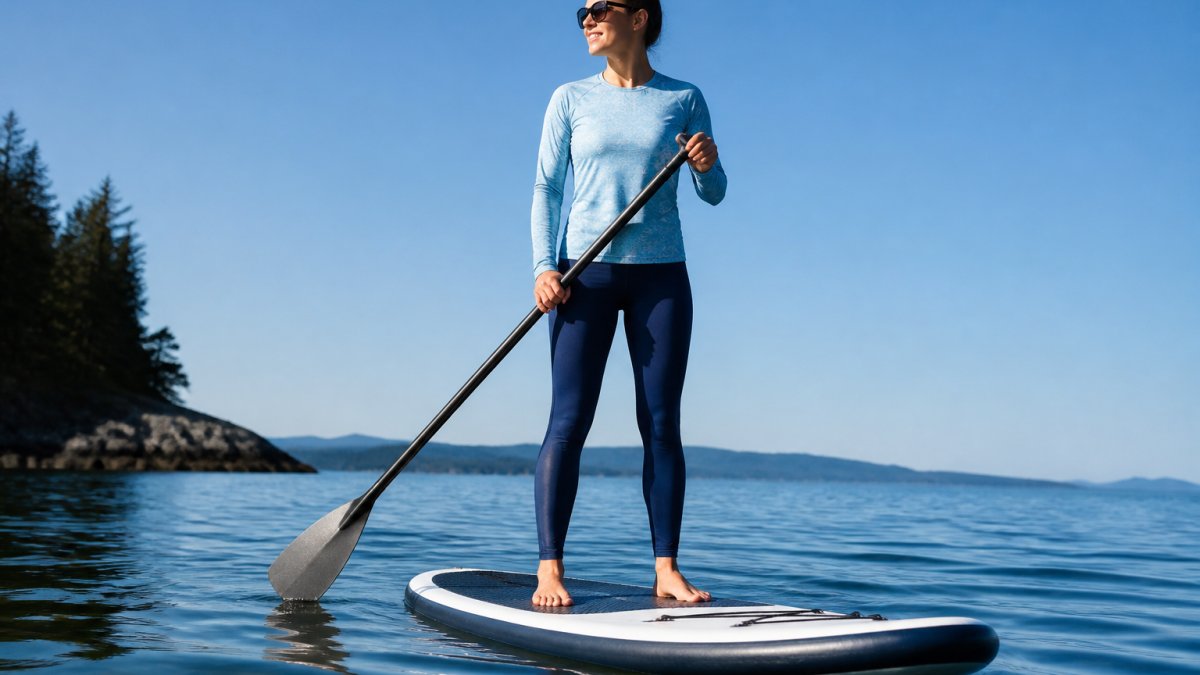
What Separates a Real Rash Guard From a Basic Swim Shirt
Most shoppers treat "rash guard" and "swim shirt" as synonyms. They aren't. A rash guard is cut to sit tight against the skin so it doesn't bunch or ride up under a wetsuit, board, or PFD. A swim shirt is cut looser for casual pool and beach wear. That distinction matters for sun protection: a loose shirt can gap at the neck, hem, and sleeves when you raise your arms, and any gap is unprotected skin.
Three fabric properties do the actual work:
- Tight knit construction. UPF comes primarily from how tightly the yarns are woven, not from a chemical coating. A denser knit blocks more UV before any treatment is added.
- Four-way stretch with recovery. Fabric that stretches thin under tension lets more UV through. Look for elastane or spandex blends that snap back to shape rather than bagging out.
- Moisture management. Quick-dry polyester and nylon blends pull water off the skin so the garment doesn't cling cold between swims. Cotton holds water and loses shape, which is why it's a poor choice for water sports.
Fit Differences by Sport
A rash guard that works for a pool lap swim is not the same one you want on a board. A common pattern among paddlers and surfers is to size down for a compression fit that stays put under a PFD, while snorkelers and casual swimmers often prefer a relaxed fit for airflow in warm water. If you're between sizes and plan to wear the top under other gear, the tighter option usually wins.
What a Rash Guard Still Doesn't Cover
This is the part most product pages skip. A long-sleeve rash guard protects your torso, shoulders, and arms, and nothing else. Your hands, neck, ears, and face remain exposed and still need sunscreen or a hat.
For men's and children's swimwear, the same logic applies. Kids' rash guards with UPF 50+ cut reapplication battles at the pool, and a swim jersey keeps everyone covered during long beach days.
Swim Leggings and Full-Coverage Options for Active Days
Swim leggings extend protection to your legs, which matters for paddleboarding, kayaking, and long days in the water. Full-coverage designs also reduce the sunscreen you need to carry, but the right configuration depends on your activity, water temperature, and how much time you spend in versus out of the water.
One-Piece Systems vs. Separates: Which Wins Where
Coverage options now go well beyond the classic one-piece swimsuit. The two main approaches behave differently in the water:
| Configuration | Best For | Trade-Off |
|---|---|---|
| Long-sleeve top + swim leggings (separates) | Paddleboarding, kayaking, snorkeling, activities with breaks on shore | Two pieces can gap at the waist when you twist or reach |
| One-piece with built-in long sleeves and legs | Surfing, diving, continuous time in the water | Harder to layer, and sizing is less forgiving |
| Swim dress or tunic over leggings | Beach days, casual swimming, post-swim errands | More fabric in the water, slower to dry |
| Rash guard + swim shorts | Warm water, high activity, minimal coverage needs | Legs and lower back stay exposed |
Separates win on flexibility, you can swap a short-sleeve top for a long-sleeve one as the day heats up, or add leggings only for the paddle portion of a beach day. One-piece systems win on security: there's no waist gap to worry about when you're duck-diving under a wave or reaching across a board.
The Coverage Trade-Off Nobody Mentions
Full coverage keeps you cooler in harsh sun but covers more skin. That's a feature, not a flaw, for anyone with sensitive skin or a history of sun damage.
Water temperature matters too. In cooler water, full coverage doubles as light thermal protection. In bath-warm water, it can feel like too much. There's no universal answer, the right call depends on how long you're submerged and how much time you spend in direct sun.
Rounding Out the Kit
Water shoes and a sun hat round out the kit for rocky beaches and reef snorkeling. They also help against jellyfish stings and sea lice in warmer water. For reef environments, choose shoes with a thin, flexible sole so you can feel the bottom without stepping on coral or urchins. A wide-brim hat with a chin strap stays put in wind and covers the ears and back of the neck that swimwear leaves exposed.
Fit, Sizing, and Comfort: What to Look For
Fit is where sun protection quietly succeeds or fails. Stretched fabric lets more UV through, and a suit that rides up leaves skin exposed.
Prioritize these when you try pieces on:
- Snug through the shoulders and torso, without restricting movement
- Flatlock seams that won't chafe during long water sessions
- Stretch that recovers, so the fabric doesn't bag out after a swim
Breathable material and lightweight fabric keep you comfortable from the beach to a post-swim walk. The best sun protective swimwear transitions from water activities to everyday wear without looking like gear.
How to Wash UPF Swimwear So Protection Lasts
How you wash UPF swimwear decides how long it protects.
Follow these steps:
- Rinse in cool water immediately after saltwater or pool use
- Hand wash or use a gentle cycle with mild detergent
- Skip fabric softener and bleach, which damage fibers
Chlorine and salt are the two biggest threats. A quick rinse removes both before they can weaken the fabric. Store pieces flat or hung, not crumpled in a wet bag.
Treat your suit well and it holds its UPF 50+ rating far longer than one tossed in a hot dryer.
Protection Trade-Offs: What UPF Swimwear Can and Can't Do
UPF swimwear is powerful, but it isn't a force field.
The Skin Cancer Foundation's sun protective clothing guidance quantifies what a UPF 50 fabric blocks. It does not claim that any single garment replaces other sun-protection measures.
Here's the honest trade-off table:
| Situation | UPF Swimwear Covers It | Still Needs Sunscreen |
|---|---|---|
| Shoulders and arms | Yes, with long sleeves | No |
| Legs | Yes, with swim leggings | No |
| Face and ears | No | Yes, or a sun hat |
| Hands and feet | No | Yes, or water shoes |
| Neck | Partly | Yes, for full coverage |
The smart play: layer UPF swimwear for your torso and limbs, then use reef-safe sunscreen on what's left exposed. That combination beats either approach alone.
Conclusion
Choosing sun protective swimwear comes down to reading labels honestly, fitting for coverage in motion, and caring for the fabric so its protection lasts. The market is growing fast: Dataintelo's sun protective swimsuits market report valued it at $1.47 billion in 2025, heading toward $2.77 billion by 2034.
At Line In The Sand, we make that decision easier. Our UPF 50+ pieces use regenerated nylon, transition from water to everyday wear, and come in versatile designs like swim dresses and leggings. Every purchase donates 100% of profits to cancer and ocean research organizations.
Shop Line In The Sand and get sun protection that works as hard as you do.
Frequently Asked Questions
What does UPF 50+ mean in swimwear?
UPF 50+ means the fabric blocks at least 98% of the sun's ultraviolet rays, allowing only 2% to pass through, according to The Skin Cancer Foundation. That is a meaningful difference from standard swimsuit fabric, which offers no standardized UV protection. Look for a label that states the UPF rating and whether it applies to the whole garment or just specific panels. A higher UPF does not replace other sun habits like shade and sunscreen on exposed skin.
Does sun protective swimwear still work when wet?
Most UPF-rated swimwear keeps its protection when wet, but the fabric can stretch slightly, which may let more UV through. The Skin Cancer Foundation notes that UPF 50 fabric blocks 98% of rays, and that rating usually holds during normal water activity. If the suit becomes loose or stretched out, protection may drop. Rinse and air-dry after each use to maintain the fabric's structure and UV-blocking ability over time.
How should sun protective swimwear fit?
It should fit close to the body without being tight enough to restrict movement. Gaps at the neckline, underarms, or waist let UV reach skin that the fabric is meant to cover. For rash guard swimwear and swim leggings, check that sleeves stay down and hems do not ride up during paddling or swimming. If you are between sizes, size up for comfort and use the brand's size chart rather than assuming your street size will match.
How do you care for UPF swimwear?
Rinse sun protective swimwear in cool water after every use to remove salt, chlorine, and sunscreen residue. Hand wash or use a gentle cycle, then air-dry away from direct sun. Avoid fabric softener and harsh detergents, which can break down the fibers that provide UV protection. With proper care, UPF 50+ swimwear can maintain its protection for multiple seasons. Check the care tag on your specific garment for any brand-specific instructions.