


Table of Contents
- Why Water Sports Demand Stronger Sun Protection
- The Best Sunscreen for Water Sports: What to Look For
- How to Protect Skin From Sun When Swimming
- UPF Clothing for Swimming: A Layer Sunscreen Can't Match
- Water-Resistant Sunscreen Reapplication: Timing and Technique
- Sport-by-Sport Sun Protection Tips for Water Sports
- Heat, Hydration, and Shade: Beyond UV Rays
- Conclusion: Build Sun Safety Into Every Session
- Frequently Asked Questions
Last Updated: October 8, 2026
Why Water Sports Demand Stronger Sun Protection
Water sports demand stronger sun protection because water reflects and intensifies UV radiation, and because sunscreens wash off faster during vigorous activity. Research published in a review of photoprotection in outdoor sports recommends applying sunscreen regardless of the UV index, since UV exposure during water sports is higher than most athletes assume.
This guide from Line In The Sand breaks down sun protection tips for water sports that actually hold up in the water, not just on the beach towel. Below, we cover sunscreen selection, UPF clothing, reapplication timing, and sport-by-sport guidance.
How Water and Reflection Intensify UV Exposure
Water reflects UV radiation back onto your skin, so you absorb UV from above and below simultaneously. A 2021 study of elite surfers, windsurfers, and sailors published through PubMed Central examined whether these athletes protected their skin adequately, and it lists rash guards, neoprene wetsuits, and UV-blocking helmets among its recommendations.
The practical takeaway: on the water, standard beach rules underperform. You need coverage that stays put through splashing, sweating, and wind.
The Best Sunscreen for Water Sports: What to Look For
The best sunscreen for water sports is a broad-spectrum, SPF 50+ formula labeled water-resistant. Three specs decide whether a sunscreen survives a session:
- Broad-spectrum protection covers UVA rays (aging, deeper skin damage) and UVB rays (burning)
- SPF 50 or higher gives a wider margin when you inevitably under-apply
- Water resistance keeps the formula on your skin through swimming and heavy sweating
Reef-safe formulas matter for open-water swimmers and snorkelers, since conventional chemical filters can affect aquatic environments.
Broad-Spectrum, SPF 50+, and Water-Resistant Formulas
SPF only measures UVB protection, which is why broad-spectrum labeling matters. A high-SPF product without UVA coverage still lets UVA rays through, and UVA drives the deeper skin damage associated with long-term sun exposure.
Water-resistant sunscreen is not waterproof. It holds its rating for a set window under test conditions, then degrades. Treat every water session as a reapplication trigger.
How to Protect Skin From Sun When Swimming
Protecting skin from sun when swimming means combining sunscreen, UPF clothing, and shade rather than relying on any single method. The American Society for Dermatologic Surgery's sun-safe sports guidance advises applying sunscreen to exposed skin at least 15 minutes before sun and water exposure, particularly during vigorous activity.
Follow this order before you get in:
- Apply water-resistant SPF 50+ to all exposed skin 15-30 minutes before entering the water
- Cover the spots most people miss (see below)
- Add UPF clothing over the top for full-coverage protection
- Reapply after 40-80 minutes in the water, or sooner after toweling off
Ears, Neck, Scalp, Lips, and Other Missed Spots
These areas burn first and get forgotten most: the ears, the back of the neck, the part line and scalp, the lips, the tops of the feet, and the backs of the hands. A lip balm with SPF and a protective hat or dive cap handle most of them without extra effort.
For the neck and ears, a UPF swim dress or long-sleeve top removes the problem entirely. Fabric does not wash off or need reapplication.
UPF Clothing for Swimming: A Layer Sunscreen Can't Match
UPF clothing for swimming provides consistent, measurable sun protection that does not degrade with sweat or water. UPF 50+ fabric blocks over 98% of UV radiation and stays effective for the life of the garment, unlike sunscreen that fades within hours.
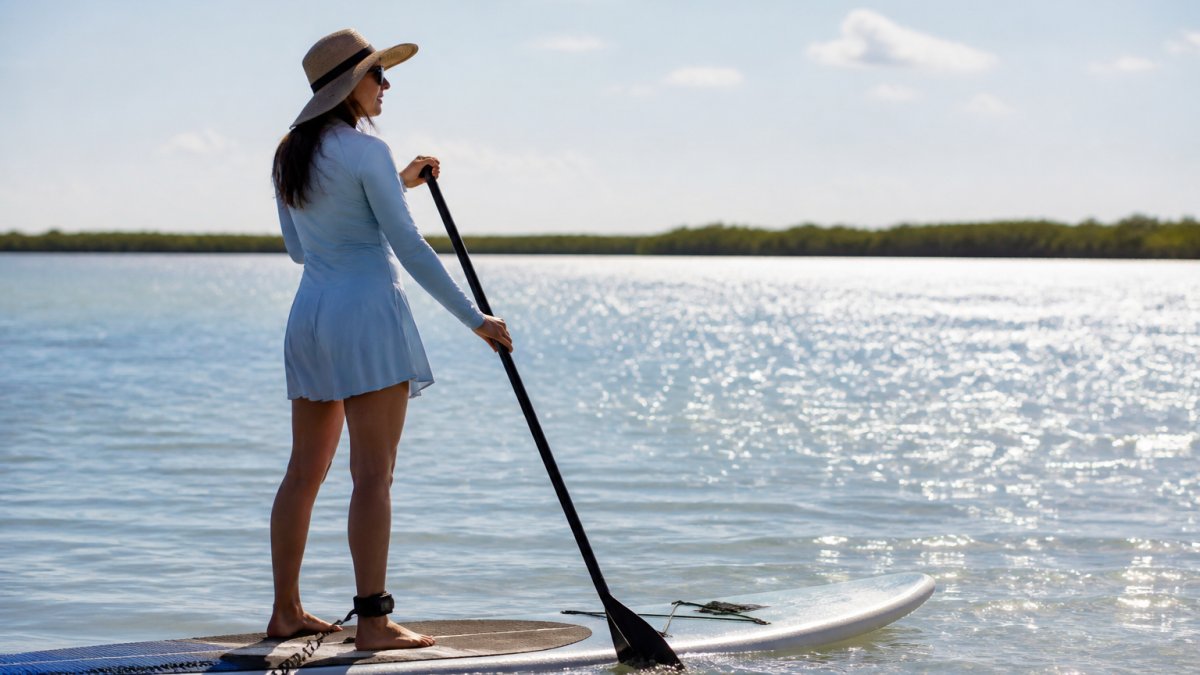
This is where Line In The Sand focuses its design: UPF 50+ active waterwear made from regenerated nylon, built to move between water and land without a wardrobe change.
Lightweight, Breathable, Moisture-Wicking Fabrics
Fabric weight decides whether you actually wear the coverage. Look for lightweight, breathable, moisture-wicking material that dries fast and does not cling when wet. Heavy cotton feels cooler in the store and miserable in the water.
The 2021 water-sports study result specifically lists rash guards designed for sun protection, neoprene wetsuits, and UV-blocking helmets or neoprene hats among its recommended measures.
Water-Resistant Sunscreen Reapplication: Timing and Technique
Reapply water-resistant sunscreen every 40 to 80 minutes during water activity, and immediately after toweling off, heavy sweating, or a long swim. The label's water-resistance window is your ceiling, not your target.
That 40-to-80-minute range comes from the FDA's water-resistance testing standard, which labels products as either 40-minute or 80-minute water resistant. The test measures how much SPF remains after a set period of moderate activity in a tub or pool, it does not simulate paddling into chop, wiping your face with a towel, or a two-hour surf session. In practice, most people hit the reapply trigger well before the label window closes.
Label Duration vs. Practical Reapplication
Treat the label number as a maximum, not a plan:
- 40-minute label: Reapply every 30-40 minutes in the water, and after every exit.
- 80-minute label: Reapply every 60-80 minutes, and sooner if you towel off, sweat heavily, or dunk repeatedly.
- Any label: Reapply immediately after toweling, wiping your face, or removing a mask or goggles that rubs the product off.
Four things shorten the effective window faster than the label suggests:
- Toweling physically lifts product off the skin, the single biggest reason protection drops mid-session.
- Sweat and water movement thin the film, especially on the forehead, nose, and shoulders.
- Friction from wetsuit collars, rash guards, PFD straps, and goggle straps wears away coverage at the edges.
- Under-application, most people use roughly a quarter to half of the amount used in lab testing, so real-world SPF is lower than the number on the bottle.
Technique That Actually Holds Up
- Start dry. Sunscreen binds poorly to wet skin. Apply 15-30 minutes before you get in, and let it set.
- Use enough. About one fluid ounce (a full shot glass) for the body; about a teaspoon for the face and neck.
- Layer, don't substitute. UPF fabric over the top means fewer exposed zones to reapply.
- Reapply lip balm with SPF at the same intervals, lips burn fast and are easy to forget.
- Set a phone timer before you get in. Nobody remembers to reapply mid-session, and sunburn on the water happens fast.
Sport-by-Sport Sun Protection Tips for Water Sports
Different sports expose different body zones, so protection should shift with the activity. Most guides treat water sports as one category. They are not. The table below maps the highest-risk exposure to priority protection, and the notes after it explain the reasoning so you can adapt it to your own session.
| Sport | Highest-Risk Exposure | Priority Protection |
|---|---|---|
| Open-water swimming | Back, shoulders, back of neck | Long-sleeve UPF top, swim cap with brim |
| Surfing | Face, ears, scalp, hands | Dive cap or UV hat, SPF 50+ stick for face |
| Paddleboarding | Shoulders, arms, tops of feet | UPF long-sleeve shirt, water shoes, SPF 50+ |
| Kayaking | Arms, thighs, face | UPF leggings, long-sleeve top, UV sunglasses |
| Snorkeling and scuba | Back, calves, ears, part line | Full-coverage UPF swimwear, dive cap, SPF 50+ |
| Fishing | Face, neck, hands, forearms | Protective hat, UPF gloves, SPF 50+ |
Why Each Sport Shifts the Strategy
Open-water swimming. You are face-down and horizontal, so the back, shoulders, and back of the neck take the most direct sun and the most reflection off the water.
Surfing. You spend long stretches sitting up, face and ears angled at the sun, and you wipe out into the water repeatedly.
Paddleboarding. You are upright and exposed on the shoulders, arms, and tops of the feet for the whole session.
Snorkeling and scuba. The back and calves are exposed while you float face-down, and the part line and ears are easy to miss under a mask strap.
Fishing. Long stationary hours mean cumulative exposure on the face, neck, hands, and forearms.
The Pattern That Holds Across Every Sport
Cover the zones the sport leaves exposed with UPF fabric, and treat sunscreen as the layer for what fabric cannot reach, face, ears, neck, hands, and feet. Then set your reapplication interval based on how often you towel off, sweat, or dunk, not just the label number.
Heat, Hydration, and Shade: Beyond UV Rays
UV radiation is only part of the risk. Heat illness, dehydration, and glare cause problems that sunscreen will never solve. The American College of Sports Medicine's guidance on sports and sun protection recommends sun-protective clothing, hats, and UV-protective sunglasses alongside hydration and shade.
Build these into every session:
- Drink fluids before you feel thirsty; water sessions hide sweat loss
- Take shade breaks every 60-90 minutes during peak sun
- Wear UV-blocking sunglasses to protect eyes and reduce glare fatigue
- Watch for early heat illness signs: dizziness, headache, nausea, or stopping sweating
Conclusion: Build Sun Safety Into Every Session
The challenge with water sports is that every protection method has a weak point: sunscreen washes off, shade moves, and reflection hits from below. The fix is layering, and it starts before you get in the water.
At Line In The Sand, we build UPF 50+ active waterwear from regenerated nylon for exactly this: full-coverage protection that transitions from the water to everyday wear, with 100% of profits donated to cancer and ocean research. Our swim dresses and leggings cover the spots sunscreen misses and dry fast enough to wear all day.
Shop Line In The Sand and build sun safety into every session.
Frequently Asked Questions
What is the best sunscreen for water sports?
Look for a broad-spectrum formula that blocks both UVA and UVB rays, rated SPF 50+ and labeled water-resistant. The American Society for Dermatologic Surgery recommends applying it to exposed skin at least 15 minutes before sun and water exposure. No sunscreen is fully waterproof, so pair it with UPF clothing, a hat, and UV sunglasses rather than relying on sunscreen alone.
How often should you reapply sunscreen during water sports?
Reapply at least every two hours, and sooner after swimming, heavy sweating, or toweling off. A 2022 review in Dermatology and Therapy suggests applying sunscreen regardless of the UV index, since water reflection and long sessions raise exposure. Set a timer on your phone or reapply each time you come out of the water to avoid missing a window.
Does UPF clothing protect you better than regular swimwear?
UPF-rated clothing blocks UV radiation through the fabric itself, so protection does not wash off or wear away the way sunscreen can. A 2021 study of elite surfers, windsurfers, and sailors recommends sun-protective rash guards, neoprene wetsuits, and UV-blocking helmets or hats. Regular swimwear offers no stated UPF rating, so a UPF 50+ long-sleeve piece gives more consistent coverage.
Can you get sunburned while swimming or snorkeling?
Yes. Water reflects and intensifies UV radiation, and being cool in the water does not reduce exposure. The 2021 water-sports study and the American College of Sports Medicine both stress protective clothing, hats, and UV-protective sunglasses alongside sunscreen. Long snorkeling or open-water swims can lead to sunburn even on cloudy days, so cover up and reapply regularly.
What should you wear to protect your skin during water sports?
Wear UPF 50+ long-sleeve tops or swim dresses made from lightweight, breathable, moisture-wicking fabric, plus a protective hat, UV sunglasses, and a dive cap if you snorkel or scuba dive. Cover the face, ears, neck, scalp, and lips, which burn easily. Regenerated nylon pieces dry fast and transition from water to land, so you stay covered between sessions.
Should you use sunscreen if you are already wearing UPF clothing?
Yes. UPF clothing covers what it covers, but exposed areas like your face, ears, hands, and neck still need sunscreen. Think of UPF fabric as your base layer and sunscreen as the backup for everything it does not cover.