


Table of Contents
- Start With the Label: What UPF 50 Actually Means
- How to Choose UPF Clothing: Fit, Fabric, and Coverage
- UPF 50 vs SPF 50: What Each Rating Protects
- How Wetness, Stretch, and Wear Change Protection
- How to Care for UPF Clothing So It Keeps Blocking UV
- Shopping Checklist by Activity and Climate
- Why UPF 50 Activewear Is Worth It for Outdoor Athletes
- Frequently Asked Questions
Last Updated: October 14, 2026
Start With the Label: What UPF 50 Actually Means
UPF 50 is a fabric rating that blocks about 98% of ultraviolet radiation, letting roughly 2% reach your skin.
At Line In The Sand, we build our waterwear around UPF 50+ fabric because the rating is the starting point, not the finish line. According to "An Overview of Ultraviolet-Protective Clothing", UPF 15 blocks 93.3% of UV radiation, UPF 30 blocks 96.7%, and UPF 50+ blocks 98%.
Here's the catch most shoppers miss: a UPF rating describes how much UV passes through fabric in a lab, not whether your whole body is covered.
So when you're learning how to choose UPF 50 activewear, read the label first, then check what the garment actually covers.
What the UPF Number Is Actually Measuring
UPF stands for Ultraviolet Protection Factor, and it works like a ratio: UPF 50 means the fabric lets through roughly 1/50th of the UV radiation that would otherwise reach your skin, about 2%. UPF 50+ is the highest category most labels use.
Two things make UPF different from the SPF number on a sunscreen bottle:
- It is measured on fabric, not skin. A lab instrument shines UV through a fabric sample and measures how much passes through.
- It covers both UVA and UVB. Sunscreen SPF is primarily a UVB (burning) measure; a UPF rating accounts for the full UV spectrum that reaches the fabric.
How a UPF Claim Gets Verified
In the United States, sun-protective clothing is typically evaluated against a recognized testing standard: a legitimate UPF claim is a tested claim, not a marketing adjective.
When you pick up a garment, look for these label signals:
- A specific UPF number, such as "UPF 50" or "UPF 50+", not vague language like "sun protective" or "UV blocking" with no number.
- The phrase "UPF" rather than "SPF." SPF is a sunscreen rating; a fabric claiming SPF is using the wrong term.
- A hangtag or label reference to testing. Many brands note the standard or lab their fabric was tested against. If a brand can't tell you how the rating was determined, treat the number as unverified.
UPF 50 vs UPF 50+: What the Plus Sign Means
A common point of confusion is whether UPF 50+ is meaningfully better than UPF 50. Both sit at the top of the scale, and the plus sign signals the highest category rather than a dramatically higher block rate.
That is why we treat the label as the entry point, not the answer: the rating tells you the fabric is doing its job, while cut, fit, and coverage tell you whether that protection reaches the skin you care about.
How to Choose UPF Clothing: Fit, Fabric, and Coverage
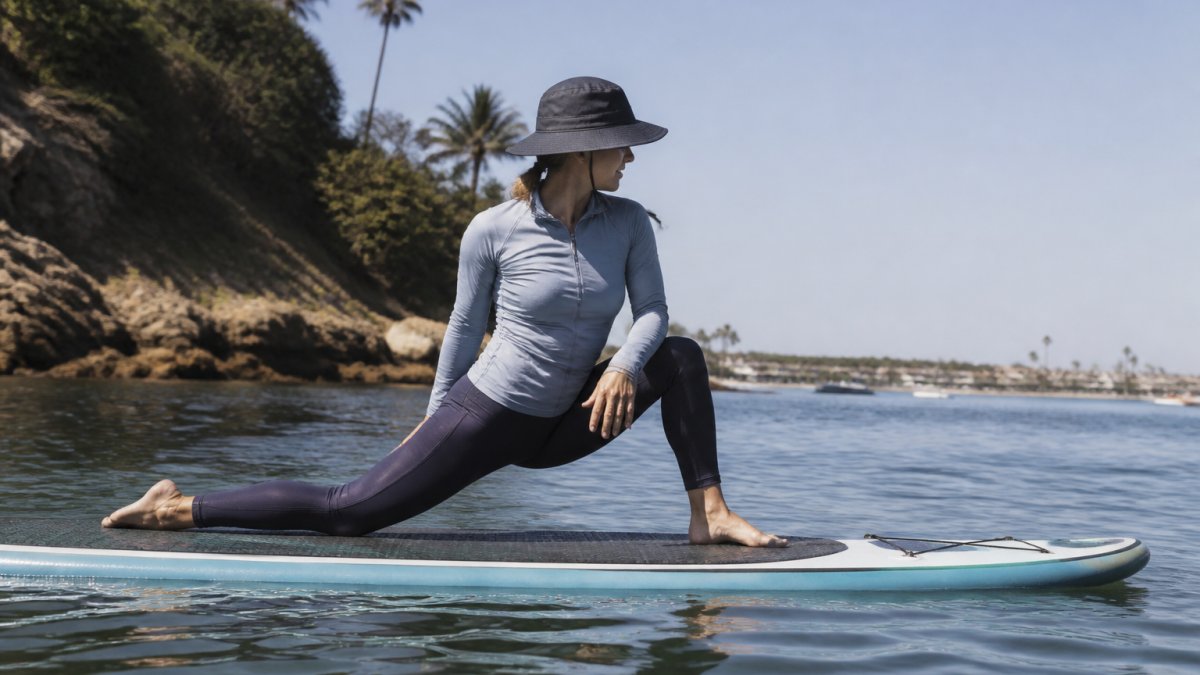
Choosing UPF clothing comes down to three things: fabric construction, fit, and coverage. Miss one and you have a sunburn waiting to happen.
Fabric Construction, Density, and Weight
Denser weaves block more UV: a tight knit with a high fiber count leaves fewer gaps for UV rays to slip through. Thicker fabric generally blocks more than thin, sheer material, but a heavy cotton tee can still let UV through if the weave is loose.
Look for these signals on a good sun-protective garment:
- A stated UPF rating on the label
- Tight, opaque fabric you can't see light through
- Dense construction over sheer, see-through material
Fit and Movement Testing for Activewear
A UPF 50 shirt that rides up when you reach overhead stops protecting your lower back. That's why fit matters as much as fabric.
Test any piece before you commit to it:
- Reach both arms overhead and check whether the hem stays put
- Bend forward and see if the back stays covered
- Twist side to side to check the waistband and shoulders
- Check that sleeves stay at the wrist, not the forearm
For water sports, add a swim test. Wet fabric can cling and shift, so make sure coverage holds once you're in the water.
UPF 50 vs SPF 50: What Each Rating Protects
UPF and SPF measure different things. SPF rates how long sunscreen delays a sunburn on skin. UPF rates how much UV radiation passes through fabric.
That difference matters for how you plan protection:
- SPF applies to sunscreen and measures burn time on exposed skin
- UPF applies to fabric and measures UV transmission through the material
- SPF needs reapplying every couple of hours; UPF protection lasts as long as the garment covers you
The Skin Cancer Foundation's guidance on sun-protective clothing frames UPF garments as one part of a sun-protection plan, not a replacement for all other steps. So the smart move is coverage where you can get it, sunscreen where you can't.
How Wetness, Stretch, and Wear Change Protection
Wet, stretched fabric usually protects less than dry, relaxed fabric. When a knit stretches, the gaps between fibers open up and more UV gets through; water can have a similar effect.
What changes your real-world protection:
- Stretch: Pulled-tight fabric lets more UV through than relaxed fabric
- Wetness: Some fabrics lose protection when soaked; others hold up better
- Wear and tear: Thinning, pilling, and fading all reduce blocking over time
For swim and paddle sports, this is exactly why fit matters. A garment that stays in place and doesn't over-stretch holds its protection better than one that pulls tight across the back.
How to Care for UPF Clothing So It Keeps Blocking UV
UPF clothing keeps its protection longer when you wash it gently and skip habits that break down fabric. The rating is built into the material and weave, so anything that thins or stretches it chips away at protection.
Follow these care steps:
- Rinse after saltwater or chlorine to protect the fibers
- Wash cold on a gentle cycle with mild detergent
- Skip fabric softener and bleach, which can damage the weave
- Air dry when you can; high heat can wear the fabric down
Check garments each season for thinning, fading, or stretched-out areas. If a piece looks worn thin, its protection has likely dropped with it.
Shopping Checklist by Activity and Climate
Match your UPF 50 activewear to your activity and climate, not just the rating, a piece built for a cool morning hike may not hold up for a full day of paddleboarding.
Start With Two Questions
Before comparing products, answer these in order:
- How much time will I spend in direct sun, and how much of it will I be wet? Water and sweat change how fabric behaves, so a water-heavy day needs different priorities than a dry trail.
- What movement will I be doing? Reaching, paddling, cycling, and running pull fabric in different directions, and the garment has to stay opaque and in place through that motion.
Activity and Climate Decision Guide
| Activity | Climate Priority | Fabric Priority | Fit Priority | Coverage Focus |
|---|---|---|---|---|
| Snorkeling and swimming | Hot, high UV, reflective water | Quick-drying, chlorine- and salt-resistant | Stays put when wet; no ride-up at the back | Full torso, shoulders, and thighs |
| Paddleboarding | Hot, exposed, breezy | Stretch that recovers shape when wet | Sleeves stay at the wrist; hem stays down on reach | Back, arms, and legs |
| Beach walking | Hot, intermittent shade | Breathable, lightweight weave | Relaxed enough to vent, opaque enough to block | Neck, shoulders, and arms |
| Hiking and trail running | Variable; altitude increases UV intensity | Dense weave, abrasion-resistant | Full range of motion without gapping at the waist | Shoulders, arms, and back of neck |
| Cycling | Long hours, wind, direct sun | Snug but not over-stretched | Stays opaque when bent over the bars | Arms, shoulders, and lower back |
| Land-to-water days | Mixed | Versatile pieces that dry fast | Looks and moves like everyday wear | Full-length coverage |
When Features Conflict, Prioritize in This Order
Most shoppers can't get every feature in one piece, so rank them:
- Coverage first. A high rating over skin the fabric doesn't cover protects nothing. Long sleeves, a high neck, and full-length legs beat a higher number on a smaller garment.
- Fit that holds through movement second. A garment that gaps when you reach or bend defeats its own rating. Test reach, bend, and twist before you buy.
- Fabric behavior in your conditions third. If you'll be wet, prioritize quick-drying, chlorine-resistant fabric. If you'll be dry and hot, prioritize breathability.
- The rating last, but never absent. Once coverage, fit, and fabric behavior are right, confirm the label states a tested UPF 50 or UPF 50+ rating.
Climate Adjustments Worth Making
- Hot and humid: Choose lighter, breathable weaves and looser cuts that let air move. A heavier fabric you won't wear is worse than a lighter one you will.
- High altitude or reflective environments (water, sand, snow): UV intensity rises, so lean toward fuller coverage and denser fabric rather than relying on a rating alone.
- Cool and windy: A snugger fit reduces flapping and gapping, but check that it doesn't over-stretch across the back and shoulders.
- Intermittent shade: Breathable, quick-drying pieces you can layer on and off beat one heavy garment.
Pre-Purchase Checklist
- Is a UPF rating stated clearly on the label, with a number, not vague language?
- Does the fabric feel dense and opaque, not sheer, when held to light?
- Does it stay put when you reach, bend, and twist?
- Does it match your climate: breathable for dry heat, quick-drying for water?
Why UPF 50 Activewear Is Worth It for Outdoor Athletes
UPF 50 activewear is worth it because it protects without reapplying and holds up through sweat, water, and movement. Sunscreen wears off; fabric coverage doesn't.
For anyone with sensitive skin or a history of sun concerns, coverage is often the more reliable path. A typical white cotton T-shirt offers only about UPF 5, letting roughly 20% of UV radiation through, according to REI's guide to sun-protective clothing.
Every purchase also supports a bigger purpose: 100% of our profits go to cancer and ocean research organizations. Sun protection you can trust, made for the way you actually move.
Picking sun-safe gear shouldn't mean choosing between protection, comfort, and style.
Frequently Asked Questions
Is UPF 50 clothing worth it?
UPF 50 blocks about 98% of UV radiation, according to a 2022 review in PubMed Central. That is far more than a typical white cotton T-shirt at UPF 5. For outdoor athletes and anyone with sensitive skin, UPF 50 activewear reduces reliance on sunscreen reapplication. It is not a substitute for all sun protection, so pair it with shade, a hat, and sunscreen on exposed skin.
Does UPF 50 clothing lose its effectiveness when wet?
Wet fabric can transmit more UV rays because water reduces the scattering of light through the material. Stretching also lowers protection by opening the weave. Choose UPF 50 activewear with a tight knit and minimal stretch, and size up if needed to avoid over-stretching. If the garment feels thin when soaked, add a layer or limit time in direct sun.
How should UPF activewear fit for effective sun protection?
It should allow full range of motion without pulling tight across the shoulders, back, or thighs. Over-stretching opens the fabric structure and reduces UV blocking. Test by raising your arms, squatting, and paddling. Look for long sleeves, a high neckline, and coverage over the lower back. A relaxed but not baggy fit keeps fabric between you and the sun.
How do you care for UPF clothing to maintain protection?
Wash in cold water on a gentle cycle and skip fabric softener, which can coat fibers and reduce performance. Air dry when possible. Avoid harsh chlorine soaks and abrasive surfaces that cause pilling. Check the garment label for specific care instructions. With proper care, UPF 50 activewear keeps its UV-blocking ability for many seasons, though wear and tear will eventually lower it.